300x250 AD TOP

AD (728x90)

Tagged under: , , , , , , ,

Distance learning

This post is just a compilation of good resources to be utilized on a distance learning environment. I personally think that we, language teachers, have been using most of these resources for quite a while now but it is always a good opportunity to re-think and re-share what we use for our classes. 
On the presentation below you'll find a brief description of the website, what can you use it for and a link to the site.

A potential problem I personally find with all these resources is the amount of screen time we are exposing our students to. Some solutions for that could be to incorporate more real world assignments or having our students to do their tasks in their notebooks and take a screenshot to share it with us. If you are concerned about this too and have an idea share it in the comments.


Some entries that could be of interest:

Tagged under: , , , , , ,

Listening Comprehension / ¿Te gusta ir a la moda?

"La Ropa" is linked to Identities and Personal Attributes in our Ab Initio classes.

In this video (level A1) you can work on descriptions of clothes, places and specific vocabulary at the same time you are exposing your students to native accents. In this case Castilian Spanish. 

The video is located in Spain as well so you can take this opportunity to introduce also your students to some culture, traditions, etc. 
According to the new guide (first exams 2020) this audio passage can be classified as:


Text C / Up to 3 min
Author: Loescher Editore
Audio: 3:15 s

It comes with a pdf to work the audio as well (find it on the right side of the screen)


Tagged under: , , , , , , , , , ,

El Imperfecto: Pasados en español

Los pasados en español son un tema que a veces puede parecer más sencillo de lo que realmente termina siendo. Sobre todo, si el caso es que nuestros estudiantes tienen como primera lengua el inglés, entonces, hay que prestar atención especial a algunos temas concretos. Por ejemplo:

  • La lengua inglesa carece de tiempos verbales que sean exactamente iguales y ocupen la misma función que la oposición entre Imperfecto/Indefinido
  • De todos modos, existen similitudes que pueden usarse positivamente:
    • El Imperfecto en español se suele traducir por el pasado continuo en inglés, aunque en este caso nos encontramos con otro problema, también se traduce por la perífrasis "estar + gerundio"
    • El Indefinido en español se traduce por el pasado simple en inglés
En la presentación se aborda una tarea de descubrimiento para que los estudiantes intenten deducir por sí mismos las terminaciones del Imperfecto a través de la lectura de un texto breve. 
Además, se tratan: formación del Imperfecto, usos, ejes cronológicos para ayudar como apoyo visual a la comprensión del contraste entre Imperfecto e Indefinido y algunas propuestas de actividades.


Education is an ornament in prosperity
and
a refuge in adversity
Aristotle
Tagged under: , , , , , , ,

Comparar en español - nivel A

These are the three basic skills a student has to master to score highly in our IB courses:

- Describir
- Comparar
- Reflexionar

This first Presentation is for A1 students or people that is going to have their first meeting with comparisons in Spanish:
After that


Tagged under: , , , , , ,

Listening Comprehension - Rutina diaria - El lorito Pedrito

Imagen relacionadaThe listening component has definitely gained presence in our IB classes with the inclusion as an important piece of our assessments. This activity can be used as in-class work or as a flipped classroom tool. I've tried both approaches with good results, probably, my students like it better when assigned as outside of class work.

This activity is based on Daily Routines vocabulary and structures and help students refine their knowledge on this unit.

After finishing this activity you can do multiple follow-up activities, such as:

  • Writing: Describe and sequence the daily routine of the lorito Pedrito paying attention to time connectors/sequencers 
  • Speaking: Talk about how his day look like with a partner and compare it with your daily routine


Related links:

Change is the end result of all true learning
Leo Buscaglia
Tagged under: , , , , , ,

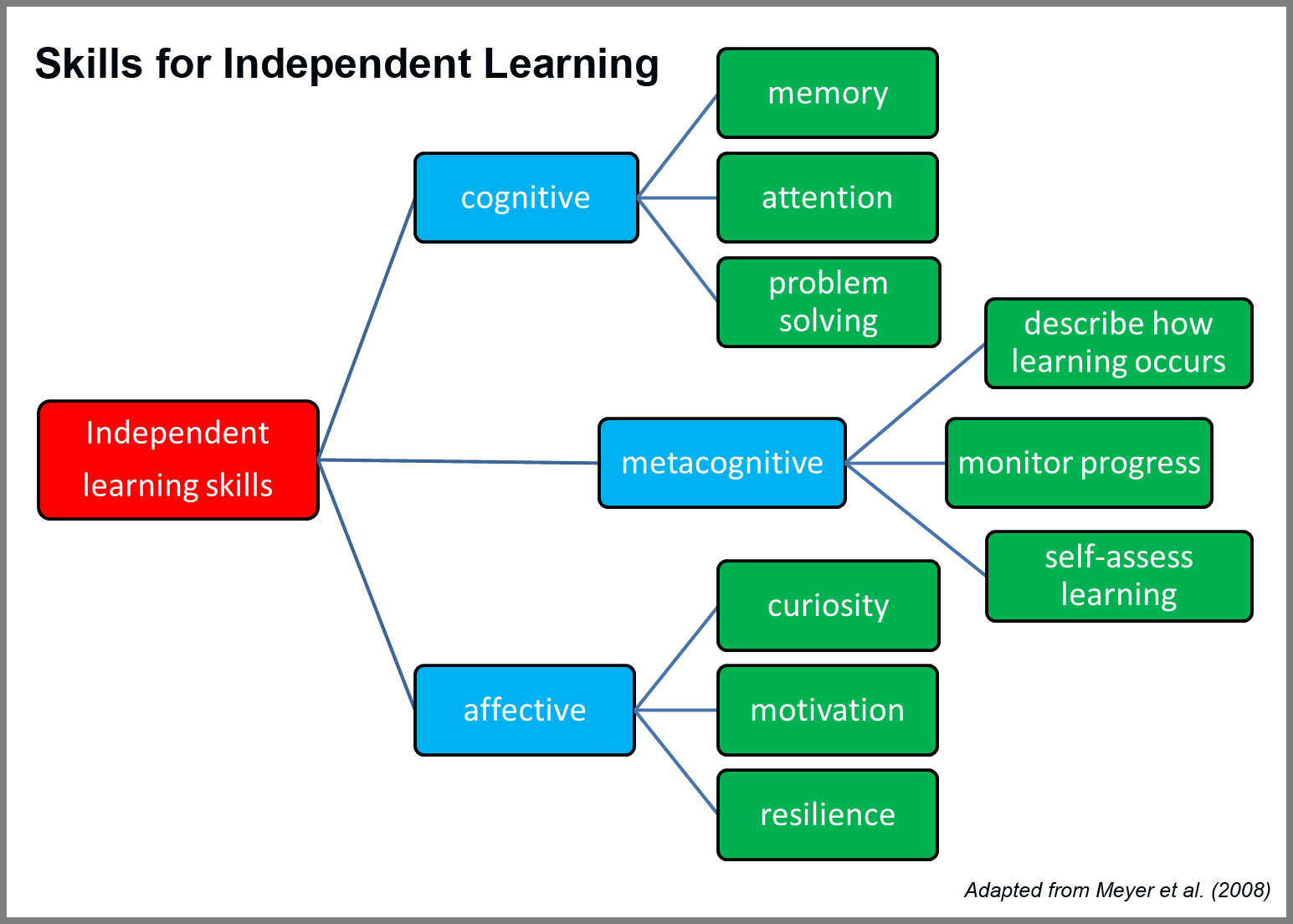
Independent learning

There is a debate at a college level whether Independent learning should be included in the first year curriculum, considering it as one of the secrets to success in tertiary education (Rachael Field, James Duffy & Anna Huggins, 2014).  

According to Zimmerman (1986, p. 308), when students are able to self-regulate their learning, they: 

  • have an understanding of their own approach to learning and how best to maximize their learning in the most efficient ways
  • are motivated to take responsibility for their learning 
  • are able to work with others to enhance the depth and breadth of their learning
I personally think that is a skill that should be learned at a secondary level as well. And for doing this, we have to adapt the idea and the resources to our learners. This presentation is my adaptation, a simple way of introducing our learners to their independence in our Spanish class.

If you put this into practice in your class, please contact me and let me know how it went.


There are more ways of motivating our students to be more independent, if you are interested in this approach, check these posts below:


Sources:
  • Independent Learning Skills, Self-Determination Theory and Psychological Well-being: Strategies for Supporting the First Year University Experience [pdf]
  • Independent learning: a literature review and a new project [pdf]
Tagged under: , , , , , , , , ,

Appetizers: "Fotolabras"

I keep working on appetizers as it seems to be a great way of engaging my students at the beginning of the class. 

This time, I come with a combination of some simple ideas, visuals and connections to learn words. Visuals are most of the time the best shortcut when it comes to something we can zip in an image and connections are a very good way of helping our students to make associations and acquire words easier in the long term. Connections are usually based on antonyms, synonyms, cognates, etc. but if you find more, do not hesitate to put them into practice, your students will thank this practice.


Human beings are curious by nature
Aristotle

Tagged under: , , , , , ,

Paper 2 / Listening Comprehension / Texto B: Sandra, mi maleta para irme a Francia

First, your students (and might be also possible, that us, teachers are too) might be anxious about listening comprehension because is a new component added to the Ab Initio course, so we have to deal with the uncertainty of being assessed for the first time, not having grade boundaries to rely on, etc.

Because of this, it is important to present these activities in a very comprehensive way to our students, I highly recommend to do pre and post listening activities to help them approach this component and consolidate their learning.


Text A / Up to 2 min
Speaker: Sandra
Origin: Mexico
Audio: 2:04 s


A possible pre-listening activity: write some
questions on the board, such as
¿Quién? ¿Qué? ¿Cuándo? ¿Dónde? ¿Por qué?
Give your class a topic and ask them to write
as many answers as they can in two minutes


Tagged under: , , , , , ,

Paper 2 / Listening Comprehension / Text A: Una tarde con mis amigos


First, your students might (surely) be anxious about listening because a lot of them think they won’t be able to understand anything and that natives speak so fast and with expressions and slang, etc

In order to control that anxiety that may arise I suggest starting off with some simple listening games. We are going to break up activities in pre-listening activities, while-listening activities and post-listening activities.

Listen to Orel from Cuba and answer the questions.


Text A / Up to 1 min
Speaker: Orel
Origin: Cuba
Audio: 25 seconds


Remember that is important to expose your
students to different accents and that is really
productive to work pre and post listening activities

Tagged under: , , , , , , ,

ab Initio Unit: Cuestiones sociales

This unit is perfect to explore and compare with other cultures controversial topics such as gender role, homeless, stereotypes, public health care or justice.

The suggested topics are:
  • Cuestiones de género
  • Desempleo
  • Desigualdad
  • Discriminación
  • Drogas
  • Estereotipos
  • Matrimonio
  • Personas sin techo (sin casa)
  • Reglas y reglamentos
  • Salud pública
  • Sistema judicial
Start off reviewing/learning some vocabulary with Quizlet:


Gender equality is more than a goal in itself.
It is a precondition for meeting the challenge of reducing poverty, promoting sustainable development and building good governance.
- Kofi Annan
Tagged under: , , , , , , ,

Ab Initio Unit: Alimentación y consumo de bebidas

This unit is simple to connect to working places, commands in Spanish, international mindedness through different types of food, recipes, etc.
An activity that is fun and works fine for this unit is the usage of realia to represent a play or a role-play in restaurants, grocery stores, etc.
Is also great to practice interactive oral skills with your students having them have conversations, dialogues centered in this topic.

Start with Quizlet to review/learn the vocabulary and then jump below to find activities ;)


Tagged under: , , , , , , , , ,

ab Initio Unit: Ocio

In this unit you can talk basically about two sub-topics:
  • Tiempo libre
  • Deportes
I recommend practicing interactive oral activities in this unit as it is really easy to use or to come up during our IA. As a general conversation topic you can always talk about what you do in your free time, after school, etc.


Tagged under: , , , , , ,

Ab Initio Unit: Tecnología

In this unit we usually assess reading comprehension and oral language production, as they are very common on the exams and easy to bring up in conversations.

The suggested topics are:

  • Relaciones cibernéticas
  • Seguridad cibernética
  • Juegos
  • Internet: entretenimiento, compras, etc.
  • Comunicación móvil
  • Redes sociales
  • Uso de la tecnología: escuela, ocio, trabajo, etc.
Start off reviewing/learning some vocabulary with Quizlet:


Technology is just a tool. In terms of getting the kids working together and motivating them, the teacher is most important
- Bill Gates
Tagged under: , , , , , , ,

Text types: Publicación en redes sociales

Our students are very familiarized with this type of text and that is great but at the same time we have to make sure that they don't incorporate some misleading ideas that might be out there.

Features of this type of text:
  • Informal register
  • Usage of graphic text: emoticons, etc.
  • Exclamations, questions marks, capital letters, etc.
  • Short and concise messages
  • Usually referring to a specific person or situation
  • Interaction with other users
  • Hashtags, keywords
  • Clear objective
There are some different social networks that have slight differences between them: Facebook, Twitter, Instagram, Snapchat, etc.
It is useful to know them and their characteristics in order to target our text better, for instance, Twitter is focused more on short messages, where the most important thing would be the content, whereas in Facebook would be more common to see visuals.

Remember that knowing the type of text you are writing and the main features is essential to score highly in your paper 2 (Writing), and that is going to be a 25% of your final score.

Resources:

Nine tenths of education is encouragement
Anatole France

Tagged under: , , , , ,

ab Initio unit: Cuestiones globales

This unit is very wide. You can talk about a lot of sub-topics. In this case, we are focusing in Conflicts and Peace and Poverty.

Discovering the knowledge through questions and inquiry this unit offers the opportunity of practicing comparisons, past tense, conditional and describing pictures talking about emotions.
Tagged under: , , , , , , , , , , ,

Appetizers: Sudoku de verbos

Revisiting the idea of Appetizers, quick, interesting activities to start off your class, this week we are looking at incorporating this traditional Japanese game. The adaptation is simple, switching numbers for verb conjugations.

If you want to know my students experience. Just by asking around I thought that some of them love this and others hate it. Hence, so far I was not clear on whether this activity is one of the best to start classes with or not, but just exposing students to it and paying attention to their feedback is enough to get to know if it is going to be productive with that class or not. Remember that flexibility is important as well as listening to your students to build up a positive and productive class environment.
Forms response chart. Question title: 1.- Do you enjoy playing Sudoku in your Spanish class?. Number of responses: 42 responses.Please, let me hear how does it go in your class ;)

Then, I thought I would just pass a google form to collect some feedback and the results surprised me, 83,3% enjoyed practicing and it turns out it's their favorite activity to start the class


Creativity is putting your imagination to work,
and it's produced the most extraordinary results in human culture.

Ken Robinson

Patreon

Help

POPULAR

RECENT

Recent Posts Widget